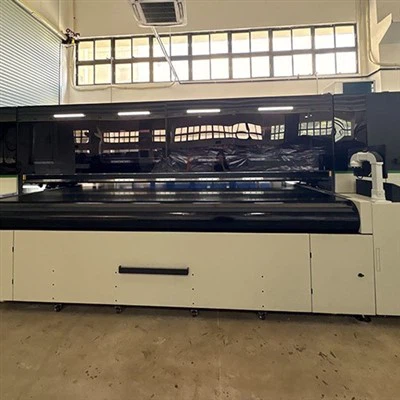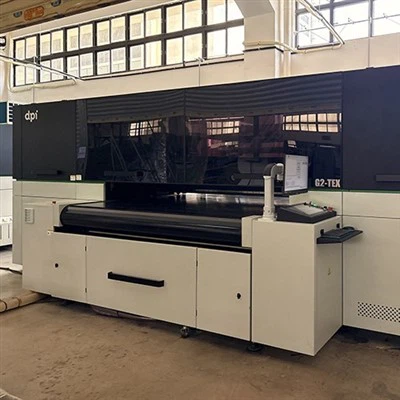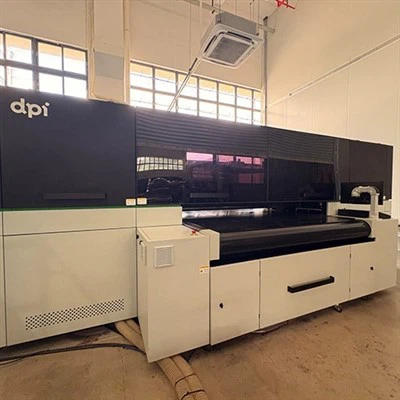


As the textile industry moves towards personalization, flexibility, and green practices, digital textile printing machines, with their advantages of precise pattern control and flexible, efficient production, have deeply penetrated multiple sub-sectors, becoming a core tool for driving product innovation and market expansion.Their applications extend beyond traditional textile processing to high-end customization and emerging application scenarios, demonstrating strong industry adaptability.
In the apparel manufacturing sector, digital printing machines are a key support for achieving fast fashion and small-batch customization. Traditional printing and dyeing, limited by plate-making cycles and minimum order quantities, struggles to quickly respond to market trends; while digital printing can directly convert designs into printed effects, supporting single-piece printing, enabling brands to flexibly launch limited-edition, co-branded, or personalized garments to meet consumers' pursuit of unique styles. Simultaneously, their accurate reproduction of complex patterns, gradient colors, and realistic images greatly enhances the creative space of clothing design, especially in the fields of sportswear, trendy apparel, and formal wear customization.
In the home textile industry, digital printing machines have driven the upgrade of decorative fabrics from single patterns to artistic and scenario-based designs. Products such as bedding, curtains, and sofa fabrics can be printed with high-resolution images of various patterns, including floral, geometric, and abstract designs. Custom designs can be tailored to different home décor styles, enhancing product differentiation and competitiveness. Furthermore, the low water consumption and low pollution characteristics of digital printing align with the safety and environmental requirements of home textile products, making it particularly suitable for infant products and high-end home décor.
In the industrial textiles sector, digital printing machines also play a unique role. For example, in automotive interiors, outdoor tents, and advertising flags, the equipment can print logos, patterns, or functional coatings on functional fabrics, balancing decorative and practical functions. For fabrics requiring resistance to friction and sunlight, by selecting weather-resistant inks and optimizing color-fixing processes, digital printing ensures that patterns remain clear and vibrant for a long time, extending product lifespan.
In addition, in the development of cultural and creative products and art derivatives, digital printing machines provide a convenient way for artistic creation on fabric. Designers can directly transfer artwork such as paintings and photographs onto scarves, handkerchiefs, tapestries, and other products, combining art and practicality and expanding the consumer boundaries of textiles.
With technological iteration and the deepening of application scenarios, digital textile printing machines are continuously breaking the boundaries of traditional printing and dyeing, injecting diverse momentum into the high-quality development of the textile industry.