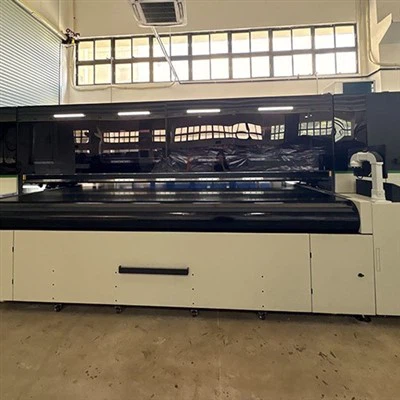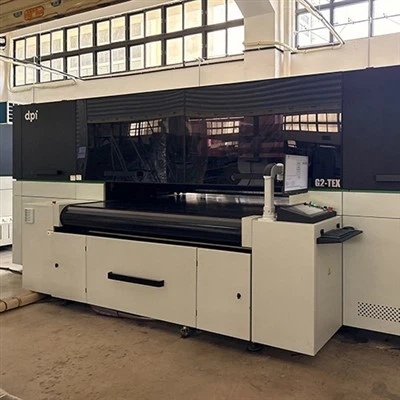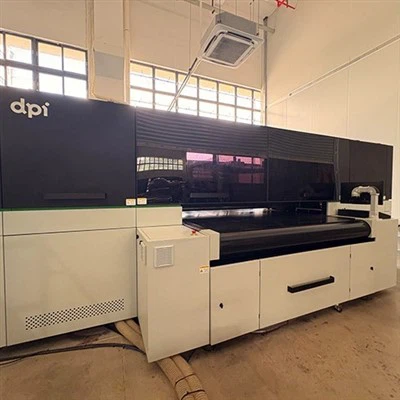


The key to the high-precision, high-efficiency, and high-flexibility production capabilities of ceramic inkjet printers in the modern ceramic decoration field lies in their interconnected and closely coordinated manufacturing process. This process, centered on digitalization, integrates pattern design, data preprocessing, printing execution, drying and curing, and high-temperature firing, transforming virtual creative ideas into ceramic products with both artistic and practical value. This reflects the deep integration of modern manufacturing technology and traditional craftsmanship.
The process begins with pattern design and digital file preparation. Based on product positioning and application scenarios, designers complete the composition, color scheme, and detail rendering in graphics software, outputting high-resolution vector or bitmap files. This stage requires careful consideration of the color gamut characteristics of ceramic inks and the color development patterns after firing to avoid color overflow or distortion affecting the final effect. The data preprocessing stage then uses professional RIP (Raster Image Processor) software to optimize the file resolution, map colors, and plan paths, generating a jetting command sequence that matches the printhead array and determining the printing order and fabric path to reduce idle runs and improve efficiency.
In the printing execution stage, the equipment drives the printhead module to move horizontally at a uniform speed under the action of the gantry or slide, according to pre-processing instructions. Simultaneously, the conveyor platform carrying the ceramic substrate feeds longitudinally at a set step distance. Together, they complete the line-by-line scanning printing of a two-dimensional plane. The printhead uses piezoelectric or thermal foaming technology to precisely spray specially formulated ceramic ink in picoli-sized droplets onto the glaze or blank surface, achieving on-demand ink supply and avoiding pigment waste and unnecessary cleaning. For irregularly shaped or curved workpieces, a multi-axis linkage platform or rotating fixture is used to dynamically adjust the printhead posture and height, ensuring complete pattern coverage and clear edges.
After printing, the process enters the drying and pre-curing stage. Low-temperature drying or infrared pre-curing systems gradually remove moisture and volatile solvents from the ink, allowing pigment particles to initially form an adhesion layer on the substrate surface, preventing smudging and peeling during handling or subsequent processes. The temperature and duration of this stage must be matched with the ink formula to avoid premature melting that would result in a blurred pattern. Pre-curing also improves the adhesion between the ink droplets and the substrate, laying a stable foundation for high-temperature firing.
The final step is high-temperature firing. The ceramic product is placed in a kiln and sintered under a set heating curve and holding conditions. This allows the inorganic pigments in the ink to fully melt and bond with the ceramic matrix, forming a strong and durable decorative layer. The firing process not only determines color fastness, gloss, and abrasion resistance, but also produces secondary color development effects on the subtle layers of the pattern. Therefore, a precise firing regime must be developed based on different ink systems and substrate characteristics.
Throughout the entire process, online monitoring and quality control are maintained. The equipment is equipped with printhead status monitoring, droplet observation, and color feedback systems, which can compare printing parameters with actual results in real time. It automatically alarms and performs compensation when micro-printing anomalies or color differences are detected. After the finished product comes off the production line, sampling inspection is conducted to evaluate pattern accuracy, color consistency, adhesion, and weather resistance to ensure compliance with quality standards.
In summary, the process flow of a ceramic inkjet printer is a complete chain driven by digital design, executed by precision machinery, with strict control of environmental parameters and culminating in high-temperature setting. The coordinated optimization of each stage not only ensures the high-fidelity presentation of the patterns, but also improves production efficiency and resource utilization, providing a replicable and scalable technical path for the ceramic industry to achieve personalized, green, and intelligent production.