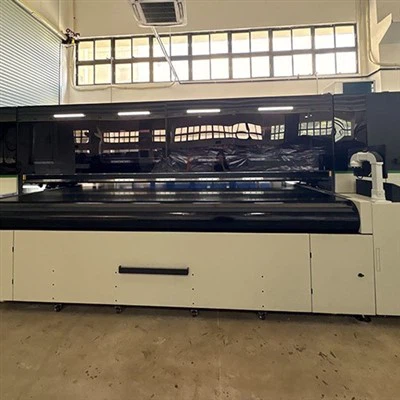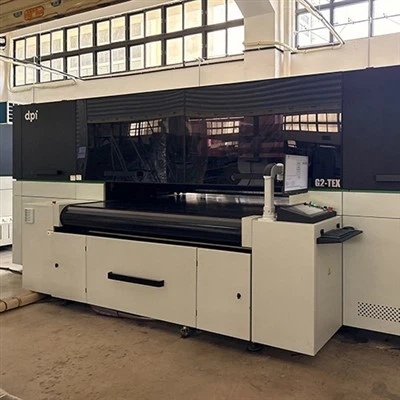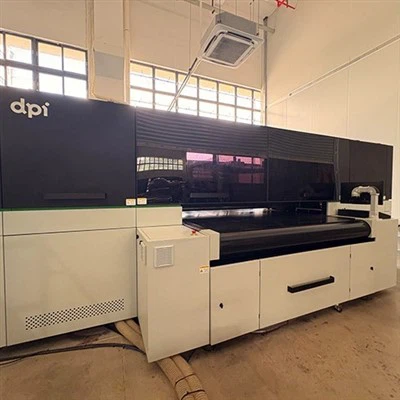


As the ceramic industry accelerates its development towards personalization, refinement, and intelligence, ceramic inkjet printers, as core equipment integrating digital technology and precision manufacturing, are profoundly changing the traditional production methods and artistic expression paths of ceramic decoration. With non-contact printing, high-precision pattern reproduction, and flexible production modes, they provide efficient and creative solutions for architectural ceramics, sanitary ware, art decorations, and specialty ceramics, becoming a significant driving force for industry transformation and upgrading.
The essence of a ceramic inkjet printer is the process of directly converting digital images into physical patterns. Relying on computer-aided design systems and professional color management software, the equipment breaks down vector or bitmap data into printhead-recognizable injection commands. Through piezoelectric or thermal foaming technology, it precisely ejects specially formulated ceramic ink in picolinar droplets onto the glaze or ceramic body surface. Unlike traditional screen printing, which requires cumbersome processes such as plate making, ink preparation, and color matching, digital inkjet printing achieves instant "design-to-production" response. Small-batch customization or multi-color switching requires no downtime for adjustments, significantly reducing the cycle from concept to finished product, making it particularly suitable for the needs of personalized home furnishings, artistic tiles, and niche design markets.
From a technical perspective, ceramic inkjet printers possess three core advantages. First, outstanding pattern precision and color performance. Mainstream models have printhead resolutions exceeding 1200 dpi, with the smallest droplet diameter only a few picometers, accurately reproducing gradient transitions, macro textures, and complex light and shadow effects. Color saturation and fidelity are significantly improved compared to traditional printing, even capable of replicating the delicate texture of oil paintings and photographs. Second, strong material adaptability and process compatibility. The equipment supports printing on various media such as glazes, blanks, dry granules, and adhesives. Combined with specialized ceramic inks (such as underglaze, in-glaze, and transparent glaze), it can achieve uniform coloring on flat surfaces, uneven surfaces, and irregularly shaped parts, expanding the application scenarios for special decorative effects such as relief, antique finishes, and metallic luster. Thirdly, it offers significant advantages in production efficiency and cost control. On-demand inkjet technology achieves ink utilization rates exceeding 90%, reducing pigment waste compared to traditional printing. Plateless printing eliminates the labor and time investment required for plate making and washing, resulting in a significant reduction in overall production costs. Simultaneously, the equipment can be integrated with automated loading and unloading, intelligent drying, and sorting systems to form a continuous production line, increasing output per unit time and optimizing manpower allocation.
Environmental friendliness is another highlight of ceramic inkjet printers. Traditional screen printing faces stringent environmental regulations due to the large-scale use of organic solvents, pigments, and cleaning wastewater; while digital inkjet printing uses water-based or low-VOC ceramic inks, resulting in lower emissions of harmful gases during production, and the ability to recycle cleaning wastewater. This significantly reduces energy consumption and pollution emissions per unit of product, helping companies meet increasingly stringent environmental regulations and international green certification requirements, and expanding export market opportunities.
Currently, with extended printhead lifespan, lower ink costs, and the maturity of intelligent color calibration technology, ceramic inkjet printers have evolved from "auxiliary equipment" to a mainstream choice for large-scale production, widely used in architectural ceramics, sanitary ware, and art decorative ceramics. In the future, with the integration of AI pattern generation, 3D stereoscopic printing and multi-material composite printing technologies, it will further unleash the creative potential of ceramic decoration and inject stronger digital momentum into the industry.