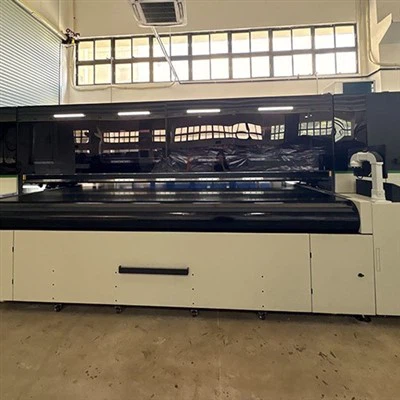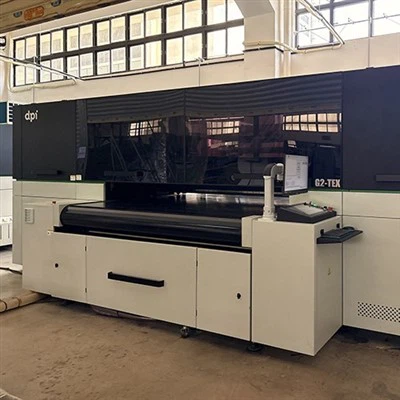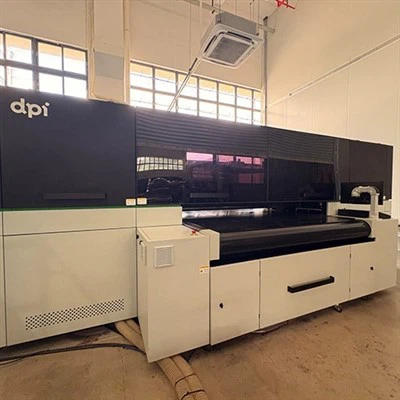


In the field of ceramic decoration, the high precision, high efficiency, and high flexibility of ceramic inkjet printers stem from their unique working method. This method, centered on digital control, organically combines pattern design with physical printing. Through a series of interconnected technical steps, it ensures the accurate presentation and stable quality of the pattern on the ceramic substrate. Understanding the essence of this method helps in grasping the equipment's operating logic and optimizing production practices.
The basic method of ceramic inkjet printing begins with the preprocessing of digital images. Design files need to undergo resolution adjustment, color correction, and format conversion using specialized software to match the printhead's ejection precision and ink characteristics. During this process, the color management system establishes a mapping relationship from screen display to actual image based on the color gamut characteristics of the ceramic ink and the target firing effect, ensuring that the final pattern's color saturation and tonal transitions meet design requirements. Preprocessing also includes planning the pattern size and printing path to reduce printhead idle runs and improve printing efficiency.
In the printing stage, the equipment uses piezoelectric or thermally energized printheads to perform on-demand ejection. The control system decomposes the pre-processed image data into line-by-line, point-by-point spraying commands and generates motion trajectories based on the spatial arrangement of the printhead array. The printheads move laterally at a uniform speed, driven by a gantry or slide, while the ceramic substrate is fed longitudinally along a set step distance on the conveyor platform. Together, they complete the full-coverage printing on a two-dimensional plane. The on-demand spraying method ensures that only pin liters of ink droplets are released in the areas requiring coloring, avoiding ink waste and reducing subsequent cleaning burden.
Ink and media compatibility is crucial for ensuring pattern quality. Ceramic inkjet printers require the selection of appropriate ceramic ink formulations (such as underglaze, in-glaze, or transparent glaze) based on different substrates such as glaze, blanks, or dry granules, and matching suitable viscosity and surface tension to maintain droplet stability during spraying and adhesion. For irregularly shaped or curved workpieces, the method requires the use of height-adjustable printheads, multi-angle deflection mechanisms, or multi-axis linkage platforms to dynamically adjust the distance between the printhead and the substrate, preventing missed spraying or ink bleeding, and ensuring pattern integrity and clear edges.
After printing, the process proceeds to the drying and pre-sintering stage. Low-temperature drying or infrared pre-curing removes most of the water and solvent from the ink, allowing pigment particles to initially adhere to the substrate surface and preventing smudging or detachment during subsequent handling. The pre-sintering temperature and duration must be matched to the ink characteristics to prevent premature melting that could affect pattern clarity. Finally, sintering is completed in a high-temperature kiln, ensuring the pigment and ceramic matrix are fully fused, resulting in excellent color fastness and durability.
Quality control methods are implemented throughout the entire process. Modern ceramic inkjet printers are often equipped with online monitoring systems that collect printhead status, droplet morphology, and printing position data in real time, comparing them with preset parameters. In case of abnormalities, automatic alarms or compensatory printing are triggered. Regularly calibrating printhead voltage, cleaning nozzles, and checking ink viscosity and tubing sealing are also necessary measures to maintain method stability.
In summary, the ceramic inkjet printer method is a systematic process that encompasses image preprocessing, digital inkjet printing, media adaptation, drying and pre-sintering, and full-process quality control. Through the precise coordination of each link, it achieves efficient, accurate, and stable transformation of ceramic decoration from concept to finished product, providing the industry with a replicable and optimizable digital forming path.