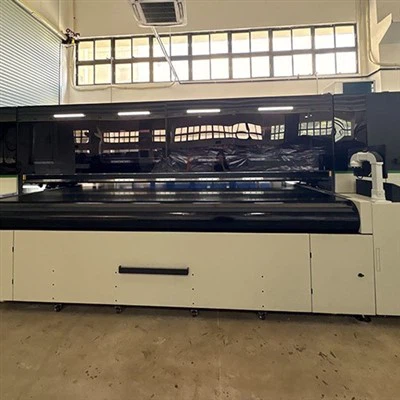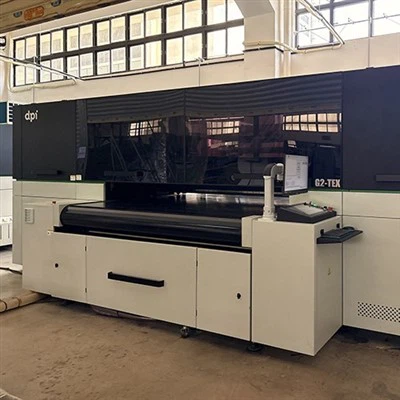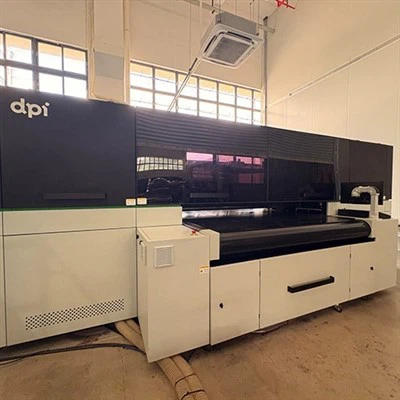


Throughout the millennia-long evolution of printing technology, each technological breakthrough has profoundly reshaped the form and boundaries of cultural dissemination.The emergence of scanning digital inkjet printers has not only reshaped the logic of industrial printing with its digital and intelligent production methods, but also injected new vitality into cultural inheritance, artistic expression, and public participation, becoming a landmark technological carrier in the evolution of contemporary printing civilization.
From the perspective of cultural recording and dissemination, scanning digital inkjet printers break through the limitations of traditional printing's scale and standardization, giving cultural content more flexible presentation possibilities. Their "no plate-making required, on-demand printing" characteristics enable niche cultural projects such as the reproduction of ancient books, the rescue of local documents, and the compilation of intangible cultural heritage skill catalogs to be promoted at low cost and high efficiency. For example, when faced with ancient and fragile ancient texts, the device can use high-precision scanning and fine-tuning of printing parameters to reproduce the texture of ink and the traces of fading on similar media, preserving a dual backup of cultural heritage-both digital and physical. For regional cultural elements such as dialect nursery rhymes and folk murals, its multi-material compatibility (such as Xuan paper, cloth, and bamboo slip replication materials) allows traditional symbols to be revitalized on modern media, broadening the reach of cultural dissemination.
In the field of artistic expression, this device breaks the conventional understanding that "printing = reproduction," becoming an extension tool for creators to realize personalized aesthetics. Its micron-level ink droplet control and variable grayscale technology can accurately capture the brushstroke layers of oil paintings, the diffusion and artistic conception of ink wash paintings, and even simulate the graininess of hand-printed materials, enabling digital art and traditional techniques to achieve a "cross-media dialogue" in printed materials. Artists can freely control color saturation and detail sharpness through parameter adjustments, extending their creative intentions from the screen to physical media, giving rise to the emerging form of "digital native printing art," enriching the expressive spectrum of contemporary art.
More importantly, scanning digital inkjet printers lower the barrier to entry for cultural creation, driving a shift in cultural dissemination from "professional-led" to "mass co-creation." Individual users can generate personalized designs using simple design software, transforming family memories and community culture into physical commemorative albums and cultural and creative products. Small studios can test original IPs with small-batch printing, without the burden of high minimum order quantities inherent in traditional printing. This "design for everyone, get it right away" characteristic activates the innovative vitality of grassroots culture, transforming printing from a "final link in cultural production" to a "starting point for cultural creation."
Technology will ultimately return to humanistic concerns. The cultural significance of scanning digital inkjet printers lies not only in improving printing efficiency and precision, but also in their open and inclusive technological characteristics, serving as a cultural bridge connecting history and the present, professionals and the public, tradition and modernity, injecting a more vibrant contemporary meaning into printing civilization.