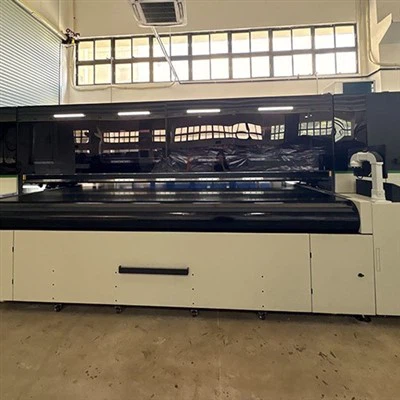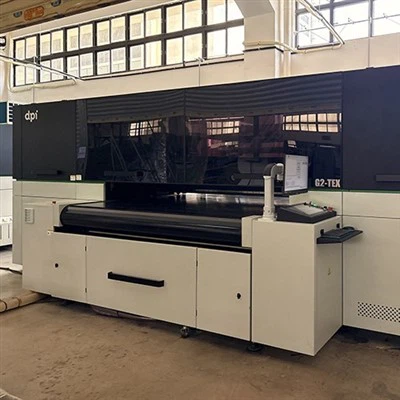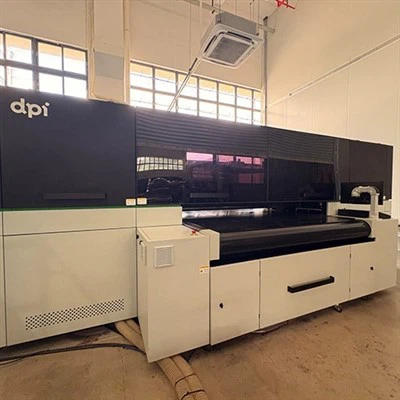


With the rapid development of digital printing equipment, scanning digital inkjet printers, as crucial high-precision and highly flexible production equipment, rely heavily on a scientific and comprehensive system of standards for performance and quality assessment. These standards not only provide a basis for equipment research and development, production, inspection, and application, but also play a fundamental role in protecting user rights and promoting orderly competition within the industry.
Current standards for scanning digital inkjet printers mainly cover mechanical safety, electrical safety, performance indicators, environmental adaptability, and environmental protection requirements. In the area of mechanical safety, relevant standards specify clear requirements for the protection of moving parts, emergency stop functions, anti-pinch design, and guide rail stability, ensuring the prevention of personnel injury and unexpected equipment downtime during high-speed scanning and long-term operation. Electrical safety standards stipulate insulation resistance, grounding resistance, withstand voltage levels, and electromagnetic compatibility indicators to prevent risks caused by leakage, overload, and electromagnetic interference, ensuring the safe operation of the equipment and surrounding systems.
Performance indicator standards are crucial for evaluating the core capabilities of the equipment. These standards typically specify key parameters such as printing resolution range, minimum droplet volume, color reproduction accuracy, repeatability, and scanning speed, and clearly define testing conditions and methods. For example, positioning accuracy is often evaluated by the maximum deviation within a specified length, while color consistency requires comparison and verification through different batches of printing using a standard color chart. These quantitative indicators provide objective references for user selection and also encourage manufacturers to continuously optimize core technologies in the design and manufacturing processes.
Environmental adaptability standards focus on the reliability of equipment under non-ideal operating conditions, including operating temperature and humidity range, vibration and shock resistance, and stability during long-term continuous operation. For scanning digital inkjet printers that need to be deployed in various industrial scenarios, meeting wide-range environmental requirements means stronger field adaptability and lower maintenance costs.
Environmental standards are receiving increasing attention, mainly reflected in energy consumption limits, noise limits, and requirements for the use of environmentally friendly inks. Standards advocate the use of low-volatile organic compound (VOC) inks and set upper limits on standby and operating energy consumption to respond to policy directions for green manufacturing and sustainable development. Meanwhile, noise control standards help improve the workshop working environment, enhancing personnel comfort and safety.
The formulation and implementation of these standards have promoted the standardized development of the scanning digital inkjet printer industry chain. On the one hand, they provide clear guidance for enterprises' technological research and development and quality control, reducing market risks caused by falsely labeled parameters or safety defects; on the other hand, users can conduct tests according to the standards during procurement and acceptance to ensure that equipment performance matches commitments. With technological advancements and application expansion, the relevant standard system will continue to improve, further helping the industry move towards high quality, high reliability, and environmental friendliness.