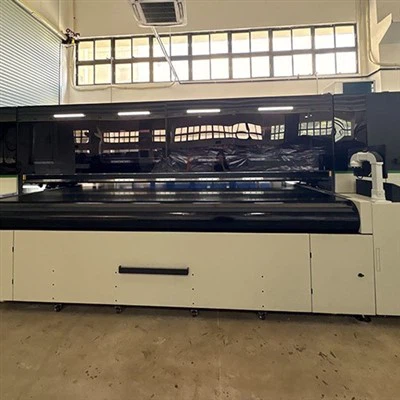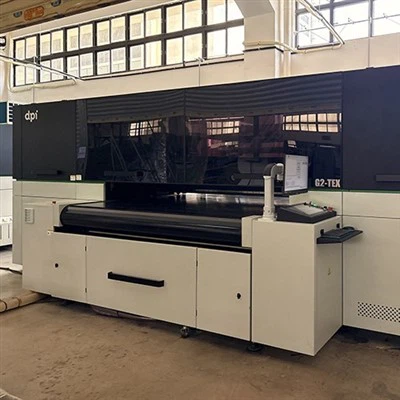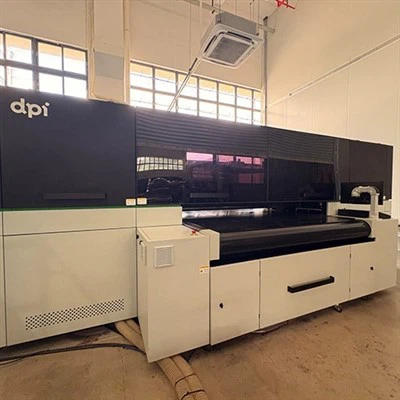


In an era of accelerated globalization and digital transformation, the printing industry is undergoing a profound transformation from traditional large-scale production to flexible and intelligent manufacturing. Scanning digital inkjet printers, as key equipment in this process, owe their rise and development not only to the inherent driving force of technological iteration but also to the practical significance of industrial transformation and upgrading and meeting diversified market demands.
From an industry perspective, traditional printing has long relied on plate making, overprinting, and large-scale mass production. While this model has advantages in standardization and cost control, it struggles to meet the market's urgent demands for personalization, small batches, and fast delivery in recent years. Consumers' pursuit of product differentiation, unique cultural symbols, and instant customization is forcing manufacturers to improve flexibility and responsiveness. Simultaneously, the popularization of Industry 4.0 and intelligent manufacturing concepts is driving the development of production equipment towards digitalization, networking, and intelligence, laying the ideological and infrastructural foundation for the widespread application of digital inkjet technology. In this context, scanning digital inkjet printers, with their plate-free and continuous scanning imaging capabilities, have rapidly filled the gap between traditional and digital printing, becoming a crucial bridge connecting the advantages of both.
From a technical perspective, scanning digital inkjet printers integrate multiple cutting-edge technologies, including precision mechanical transmission, high-precision servo control, digital image processing, and micro-droplet jetting. Driven by a guide rail, the printhead moves at a constant speed along the width of the media, and performs line-by-line printing by analyzing image data in real time. This overcomes the physical limitations of fixed-width equipment while ensuring high resolution and color consistency. The application of multi-color printhead collaboration and variable droplet technology results in richer image layers and more precise details, making it widely applicable to various materials such as paper, film, metal foil, and glass, greatly expanding the application scope of printing.
From an industrial perspective, the promotion of scanning digital inkjet printers has multiple benefits. First, it significantly improves production efficiency and resource utilization. On-demand inkjet printing reduces ink waste, shortens production cycles, lowers inventory and trial-and-error costs, and helps companies achieve lean production. Second, it strengthens companies' market responsiveness. Faced with multi-variety, small-batch order structures, the equipment can quickly switch tasks without cumbersome plate changes, enhancing the company's competitiveness in niche markets. Third, it promotes green and low-carbon manufacturing. The compatibility with environmentally friendly ink systems such as water-based and UV-cured inks makes the printing process more aligned with energy conservation and emission reduction policies, responding to the common global demand for sustainable development. Fourthly, it promotes cross-industry integration and the development of the creative industries. The penetration of this equipment into packaging design, building materials decoration, electronic signage, and cultural and creative products injects innovative momentum with both aesthetics and functionality into traditional industries, expanding the boundaries of printing's role in cultural dissemination and industrial support.
In summary, the rise of scanning digital inkjet printers is both an inevitable choice for the printing industry to meet the challenges of the times and a vivid manifestation of technological innovation empowering manufacturing upgrades. Its profound significance in reshaping production models, optimizing resource allocation, leading green transformation, and stimulating creative potential will continue to drive the industry towards high quality and high added value, consolidating the core position of digital printing in the global manufacturing landscape.