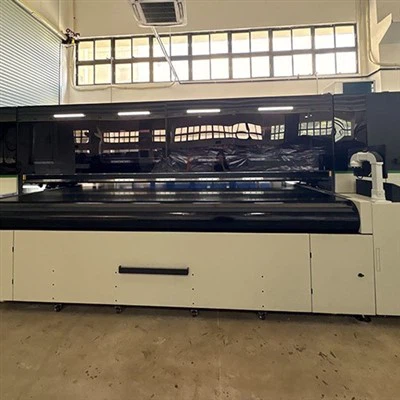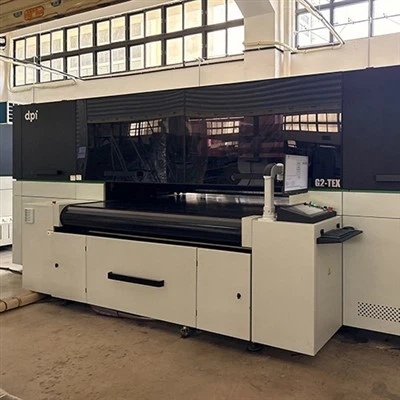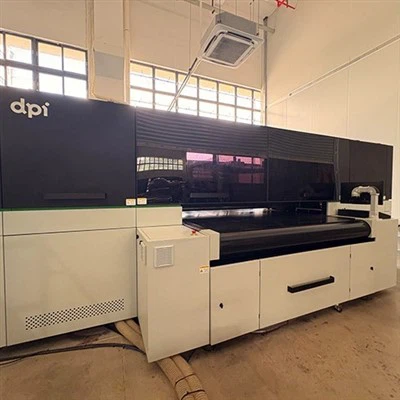


Against the backdrop of accelerated transformation and upgrading in the textile printing and dyeing industry, digital textile printing machines, with their unique technological advantages, are gradually becoming an important force driving changes in production methods.Their characteristics are concentrated in pattern precision, production flexibility, resource utilization efficiency, and environmental performance, meeting both the market's demand for diversified and personalized products and aligning with the industry's strategic goals for sustainable development.
Firstly, they excel in pattern precision and color expression. Digital printing machines utilize high-precision printheads and advanced color management technology, accurately reproducing subtle layers, gradient transitions, and complex textures in designs onto the fabric surface. The ink droplet size can be controlled within an extremely small range, achieving high-resolution output, resulting in clear pattern outlines and high color saturation, approaching or even surpassing the visual effects of traditional printing. This feature provides designers with ample creative space, especially advantageous in high-end fashion, art derivatives, and fine home textiles.
Secondly, they offer strong production flexibility and fast response speed. Traditional printing relies on plate-making processes, which are time-consuming and uneconomical for small-batch orders. Digital printing, however, eliminates the need for plate-making; pattern data directly drives the printhead, enabling instant conversion and multi-variety switching. Single-piece or small-batch production remains cost-effective, enabling rapid response to market trends and customer customization needs, significantly improving supply chain agility, and making it particularly suitable for fast fashion, personalized customization, and limited-edition production models.
Furthermore, it boasts high resource utilization efficiency, significantly reducing material and energy consumption. Digital printing utilizes on-demand inkjet technology, with almost all ink applied to the pattern area, reducing the use of excess dyes and auxiliaries and effectively minimizing raw material waste. The process eliminates numerous washing steps, using far less water than traditional printing and dyeing, resulting in a substantial reduction in wastewater generation and alleviating pressure on wastewater treatment. Simultaneously, the low-temperature color-fixing process reduces heat consumption, further lowering production energy consumption.
Environmental performance is a key highlight. By reducing chemical usage and wastewater discharge, digital printing aligns better with green manufacturing principles, helping companies meet increasingly stringent environmental regulations and international market certification requirements for sustainable products. In addition, continuous optimization of ink systems, with the increasing prevalence of low-toxicity and harmless formulas, enhances product safety, making it suitable for fabrics that come into contact with skin and children's products.
In summary, digital textile printing machines, with their high precision, high flexibility, low consumption, and low emissions, are reshaping the production logic of textile printing and dyeing, providing the industry with modern solutions that combine economic and environmental benefits, and helping the textile industry move towards high quality and sustainability.