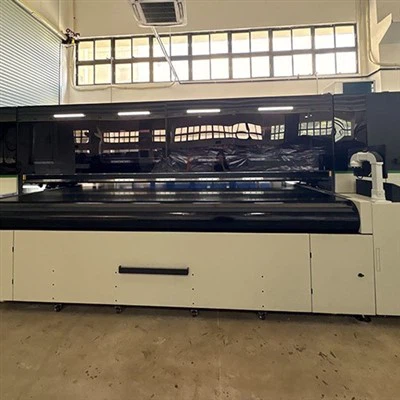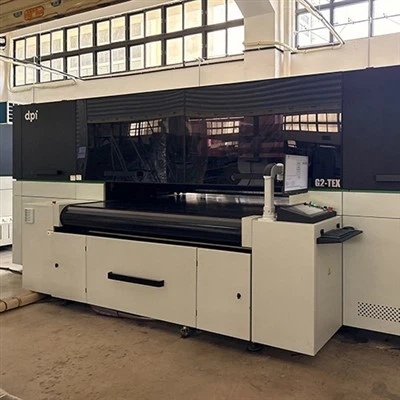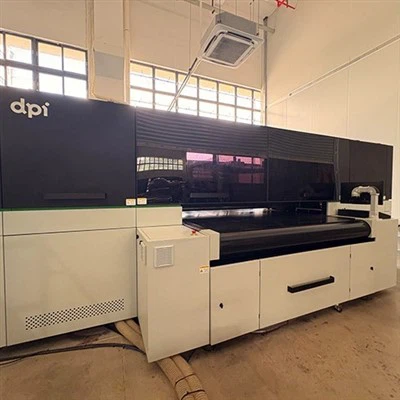


In the current context of accelerated transformation in the global textile industry, digital textile printing machines, with their significant advantages, are becoming a crucial force driving innovation in production methods. Compared to traditional printing processes, they demonstrate comprehensive competitiveness in pattern representation, production organization, resource utilization, and environmental compliance, providing solid support for the industry's high-quality development.
Firstly, significantly enhanced pattern reproduction capabilities and creative freedom. Digital printing machines, relying on high-precision printheads and professional color management systems, can achieve extremely high-resolution pattern output, accurately presenting gradients, multi-colors, and complex textures, with color reproduction closely approaching the original design. This refined expressiveness breaks through the limitations of traditional printing's color matching and halftone dots, allowing designers to freely explore more artistic and personalized visual languages, meeting the stringent aesthetic demands of high-end fashion, custom apparel, and art derivatives.
Secondly, leading production flexibility and market responsiveness. Traditional printing requires multiple processes such as plate making, color matching, and trial printing, resulting in long plate changeover cycles and insufficient economic viability for small-batch orders. Digital printing eliminates the need for plate making; pattern data directly drives printing, supporting instant switching and design changes, enabling single-item printing and parallel production of multiple varieties. This model significantly shortens delivery cycles, allowing businesses to quickly capture market trends, handle personalized customization and niche orders, and improve supply chain agility and customer satisfaction.
Thirdly, resource utilization efficiency is significantly improved. Digital printing uses on-demand inkjet technology, with almost all ink applied to the pattern area, avoiding the ineffective consumption of large amounts of dyes and auxiliaries in traditional processes, thus greatly improving raw material utilization. Simultaneously, the process eliminates repeated washing and high-temperature curing, significantly reducing water and energy consumption, helping to reduce production costs and environmental impact.
Fourthly, environmental advantages align with sustainable development trends. Traditional printing generates wastewater and exhaust gases due to large amounts of water, chemicals, and high-temperature treatments, placing significant environmental pressure on the industry. Digital printing, on the other hand, greatly reduces wastewater discharge and generally uses low-toxicity, harmless ink systems, meeting international environmental standards and green product certification requirements, providing strong support for businesses to comply with regulatory constraints and expand into international markets.
In summary, digital textile printing machines, with their superior pattern rendering capabilities, flexible and efficient production modes, excellent resource utilization, and environmental performance, are profoundly changing the landscape of the printing and dyeing industry and becoming a core engine driving the industry towards digitalization, greening, and high-end development.