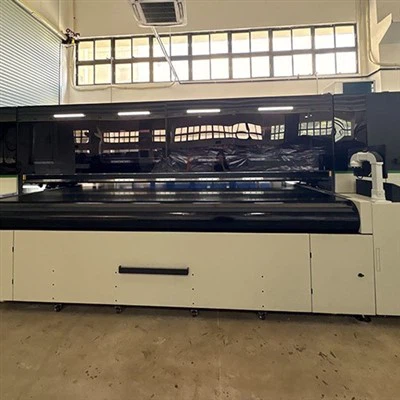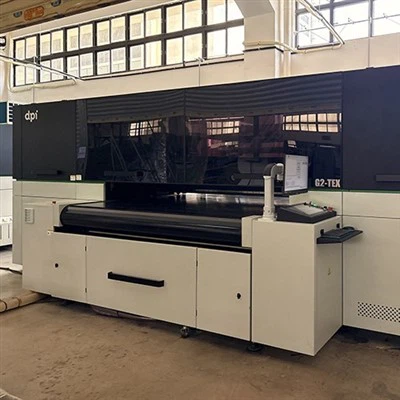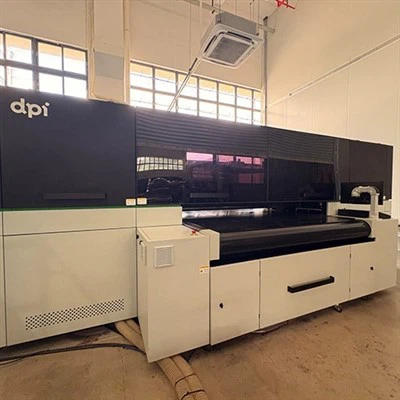


Digital Textile Printing Machines: Ushering in a New Chapter of Digital Transformation in the Dyeing and Printing Industry
In the wave of accelerated transformation towards intelligent and green manufacturing in the textile industry, digital textile printing machines, as core equipment, are reshaping the traditional dyeing and printing landscape with revolutionary technology, becoming a key force driving industrial upgrading. Through precise digital control and on-demand printing, they break through the limitations of traditional screen printing and roller printing, opening up a new, efficient, flexible, and environmentally friendly path for textile decoration.
From a technical perspective, digital textile printing machines rely on computer-aided design (CAD) and high-precision inkjet systems to convert pattern data into micron-level ink droplet injection instructions, directly forming color layers on the fabric surface. Unlike the cumbersome process of traditional dyeing and printing requiring plate making, digital printing achieves rapid "what you see is what you get" conversion-small-batch orders can be responded to instantly, and multiple color switching can be done without machine downtime, significantly shortening the cycle from design to finished product, especially suitable for the needs of personalized customization, fast fashion, and niche trend markets.
In terms of production efficiency and quality, digital printing demonstrates significant advantages. Employing on-demand ink supply technology, this technology achieves an ink utilization rate exceeding 95%, reducing dye waste by more than 30% compared to traditional processes. Combined with a precise color management system, it achieves over 98% Pantone color reproduction accuracy, producing natural and delicate gradient transitions, overcoming the limitations of traditional printing color matching and edge blurring problems. Simultaneously, the low-temperature fixing process reduces fiber damage, making it suitable for various materials such as cotton, linen, silk, synthetic fibers, and blends, expanding the application scenarios for printing.
Environmental friendliness is another major highlight of digital printing. Traditional printing and dyeing often face wastewater treatment pressure due to the large amounts of water, chemical agents, and high-temperature fixing; while digital printing only requires a small amount of water to clean the printhead, with no wastewater discharge. Furthermore, the ink does not contain heavy metals or other harmful components, aligning with the global textile industry's sustainable development goals of carbon reduction and energy conservation, and helping companies cope with increasingly stringent environmental regulations.
Currently, with improved printhead precision, reduced ink costs, and enhanced equipment stability, textile digital printing has evolved from a "supplementary process" to a mainstream choice for large-scale production, widely used in apparel, home textiles, and industrial textiles. In the future, with the integration of technologies such as AI pattern generation and intelligent color matching, it will further unleash flexible production capabilities and inject stronger innovative momentum into the textile industry.