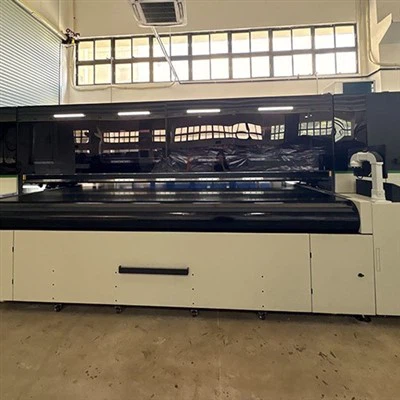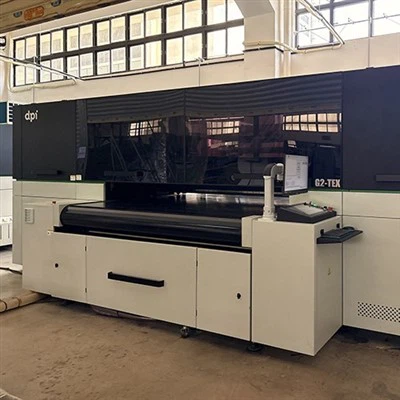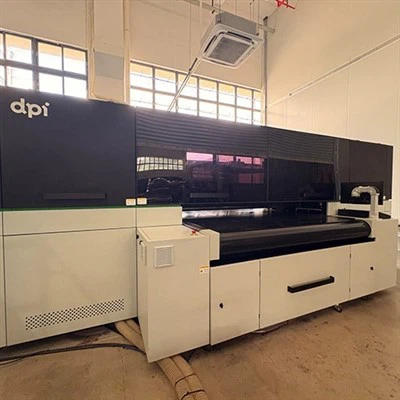


With the ceramic manufacturing industry rapidly moving towards intelligent and refined processes, digital glazing machines have become crucial equipment for improving glaze quality, reducing defect rates, and achieving flexible production. Faced with a diverse range of models and technical configurations on the market, scientifically selecting equipment that suits your production needs requires a systematic evaluation from multiple dimensions, including process compatibility, performance indicators, stability, service capabilities, and economic efficiency.
First, the functional requirements of the glazing machine based on the production process and product positioning should be clearly defined. Different ceramic categories (such as wall and floor tiles, bathroom fixtures, and artistic ceramics) differ in glaze type, body shape, and surface effect. The selected equipment must possess corresponding nozzle structures, atomization methods, and motion control capabilities. For example, for uniform glazing of complex curved surfaces, multi-axis linkage or variable tilt nozzle designs should be prioritized; for high-speed glazing of large-sized flat products, attention should be paid to the matching degree of nozzle width and travel speed to ensure production capacity and glaze consistency.
Second, core performance indicators are an important basis for selection. The key considerations for evaluating equipment should include glaze layer control precision, glaze application uniformity, and repeatability. Digital glazing machines rely on pressure sensors, flow controllers, and closed-loop algorithms for precise control. When purchasing, it's essential to understand their minimum glaze thickness control capability, thickness fluctuation range, and supporting testing methods. Simultaneously, the nozzle atomization particle size and distribution uniformity directly affect the glaze texture; therefore, verification of the atomization effect to meet product design requirements should be conducted through prototype demonstrations or third-party testing.
Equipment stability and reliability are crucial for long-term production continuity. Attention should be paid to the materials and manufacturing processes of key components, such as nozzle wear resistance, glaze supply pipeline corrosion resistance, and pumping system stability. Manufacturers providing lifespan data for key components and on-site operational case studies can serve as evaluation references. Furthermore, the equipment's real-time monitoring, fault warning, and automatic compensation functions are also important indicators of its intelligence level and operational reliability.
Service capabilities and supporting facilities are equally important. Digital glazing machines involve hardware and software integration and process parameter optimization; suppliers should possess comprehensive technical training, installation and commissioning, and after-sales response systems. Manufacturers that can provide glaze compatibility advice, process parameter libraries, and remote diagnostic services can help users quickly achieve ideal results after production, reducing quality risks during the break-in period.
Economic evaluation requires comprehensive consideration of purchase cost, consumable consumption, energy consumption, and maintenance costs. High-priced models may not be suitable for all companies; a solution that balances performance and cost should be chosen based on the company's production volume and product level. Understanding the manufacturer's spare parts supply cycle and maintenance costs helps predict total lifecycle operating expenses.
Finally, it is recommended that users conduct on-site research and prototype trials before making a decision. This includes process verification using their own ceramic blanks and glazes, observing the equipment's performance under different operating conditions, and exchanging user experiences with existing users. Through multi-dimensional comparison and practical verification, a digital glazing machine that meets current production needs and has future upgrade potential can be selected, laying a solid foundation for improving the quality and efficiency of ceramic production and its intelligent transformation.