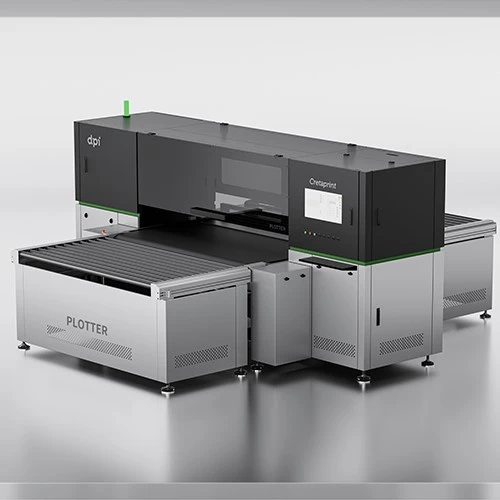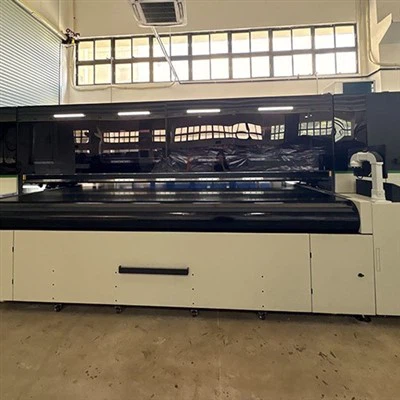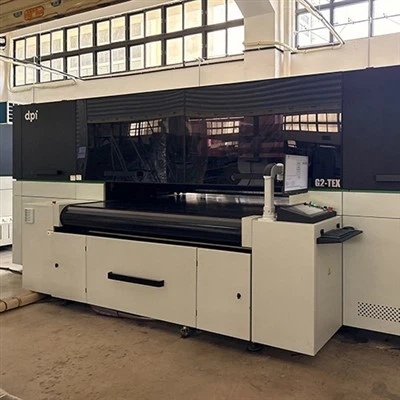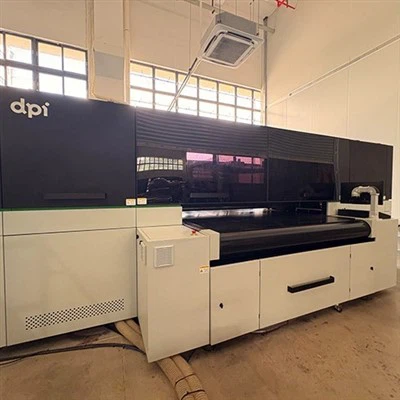


In the wave of accelerated transformation towards digitalization, flexibility, and green manufacturing, scanning digital inkjet printers, with their unique technological advantages and wide application scalability, have become a significant force driving innovation in the printing and related industries. Their industrial value lies not only in improving production efficiency and product quality, but also in breaking down the barriers between traditional manufacturing and personalized demands, fostering new business models and creating multi-dimensional benefits for all links in the industrial chain.
From the perspective of production model innovation, scanning digital inkjet printers break the dependence of traditional printing on plate making and large-scale production, achieving flexible production of "plateless printing and on-demand printing." This characteristic enables companies to quickly respond to the market trend of multi-variety, small-batch orders, significantly shortening product development and launch cycles, and reducing inventory backlog and raw material waste. In industries such as packaging, advertising, and signage, this agile manufacturing capability can be directly transformed into a competitive advantage, helping companies seize market share in niche segments and improve capital turnover efficiency.
In terms of quality and precision assurance, this equipment relies on high-precision guide rails, a servo control system, and real-time error compensation algorithms to ensure high synchronization between printhead movement and ink droplet ejection, achieving micron-level positioning accuracy and stable color reproduction. Its multi-color independent printhead collaborative operation and variable droplet technology result in richer image layers and more precise details, meeting the stringent quality requirements of high-end packaging, electronic circuit printing, and building materials decoration. This high-quality, continuous output capability not only enhances the added value of end products but also strengthens the company's bargaining power and brand reputation in the high-end market.
Cross-industry application expansion is another important dimension of the value of scanning digital inkjet printers. With excellent compatibility with various materials such as paper, plastic film, metal foil, and glass, the equipment has expanded from traditional graphic printing to areas such as customized packaging, functional printing, cultural and creative product development, industrial signage, and anti-counterfeiting. In the cultural and creative industries, it enables personalized art printing and limited-edition product production; in the building materials industry, it achieves integrated presentation of complex textures and colors; and in the electronics manufacturing field, it can complete high-speed and stable printing of tiny, precise markings. This cross-industry penetration has driven the deep integration of printing technology with other industries, creating new growth points.
In terms of green manufacturing and sustainable development, the on-demand inkjet printing characteristics of scanning digital inkjet printers significantly reduce ink waste. Combined with environmentally friendly ink systems such as water-based and UV-cured inks, this effectively reduces volatile organic compound emissions and energy consumption, aligning with industrial policy guidance under the "dual carbon" goal. By adopting this type of equipment, companies can not only reduce environmental governance costs but also cultivate a responsible corporate image and gain advantages in green supply chains and market access.
In summary, with flexible production, high-precision output, cross-industry applications, and green environmental protection as its core values, scanning digital inkjet printers are reshaping the ecological landscape of the printing and related manufacturing industries. It is not only a tool for improving production efficiency and product quality but also a crucial engine for driving industrial innovation, expanding market boundaries, and achieving sustainable development. Its industrial value will be further highlighted as intelligent manufacturing and consumption upgrades continue to advance.