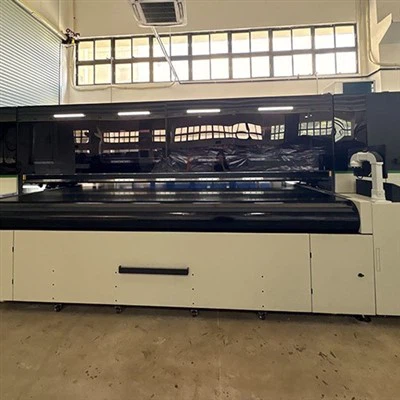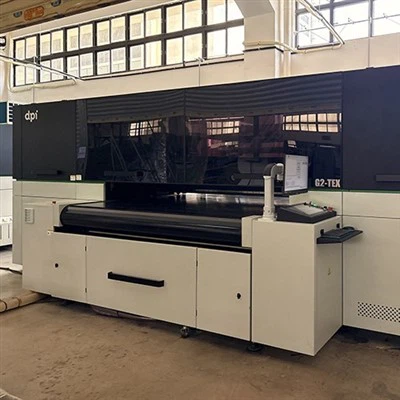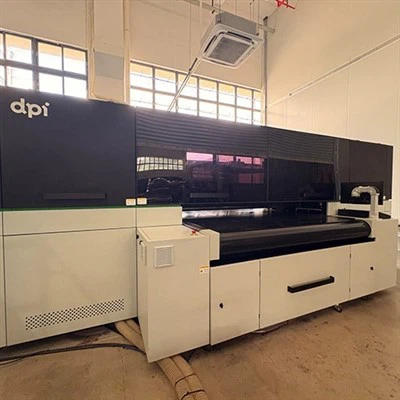


As a digital management platform for the entire ceramic manufacturing process, the ceramic production line digital management system must be designed to fully consider the typical environment and special operating conditions of ceramic production to ensure stable and reliable operation in diverse scenarios. The breadth and depth of the applicable environment not only relates to the feasibility of system deployment but also directly affects the accuracy of data acquisition, the timeliness of control, and the maintainability for long-term use.
Ceramic production workshops are generally characterized by high temperature, high humidity, high dust concentration, and the presence of corrosive gases. The temperature in the kiln area where the firing process takes place is consistently above 1000 degrees Celsius, and the adjacent areas also maintain high ambient temperatures. Humidity fluctuations are significant during the glazing and drying processes, easily causing condensation on equipment surfaces. Fine dust is generated during raw material crushing, ball milling, and conveying, posing a potential threat to electronic components and communication lines. Some glazes and solvents release acidic or alkaline gases during use and volatilization, which may affect the durability of metal connectors and circuit boards. Therefore, the digital management system must adopt industrial-grade protection standards in hardware selection, such as dustproof, moisture-proof, and corrosion-resistant chassis and connectors. Key sensors and controllers should be insulated, isolated, or subjected to positive pressure ventilation to ensure long-term stable operation in harsh environments.
The complex electromagnetic environment of the workshop is also a challenge that must be addressed. Presses, kiln ignition systems, frequency converters, and high-power lighting generate strong electromagnetic interference, which can easily lead to signal transmission errors or data loss. A high-performance digital management system should employ shielded cables, differential signal transmission, and communication protocols with strong anti-interference capabilities. The wiring design should separate strong and weak current circuits and ensure proper grounding to reduce the impact of noise coupling on data acquisition and control commands.
Regarding spatial layout and installation conditions, ceramic production lines often have large spans and dispersed processes. The distance from the raw material workshop to the finished product warehouse can be hundreds of meters, and there may be multi-level, three-dimensional layouts. The system needs to support distributed deployment, installing data acquisition nodes near each process site and aggregating data to the central platform via industrial Ethernet, fiber optics, or wireless bridges. This reduces the cost and risk of long-distance cabling while ensuring real-time performance. Simultaneously, the maintainability of the equipment installation location should be considered, reserving maintenance access and safe operating space to facilitate daily inspections and component replacement.
The system's adaptability to energy and network environments also falls within the scope of its applicable environment. In some factory areas, power supply may experience voltage fluctuations or short-term interruptions. The system should be equipped with voltage regulators and uninterruptible power supply (UPS) modules to prevent data loss or control failure due to sudden power outages. Regarding network connectivity, it must support stable transmission over wired backbone networks and also possess local networking capabilities in areas with limited wireless signals, ensuring seamless data flow across the entire production line.
Furthermore, different ceramic enterprises have varying management models and IT infrastructures. The applicable environment also includes compatibility with existing IT/OT systems. The system must be able to flexibly integrate with the enterprise's existing ERP, MES, warehouse management, or energy monitoring platforms, supporting multiple industrial protocols and data formats to avoid information silos caused by environmental differences and ensure overall synergy of the digital management system.
Overall, the ceramic integrated digital management system is applicable to complex operating environments such as high temperature and humidity, dust and corrosion, strong electromagnetic interference, spatial dispersion, and energy network fluctuations, and must be compatible with diverse enterprise information infrastructures. Through targeted hardware protection, robust communication design, flexible deployment methods, and open integration capabilities, the system can operate continuously and stably in real production environments, providing reliable digital management support for ceramic manufacturing enterprises.