


Quality-Control Ceramic Digital Management System: Minimizing Defects and Ensuring Consistency in Ceramic Production
For ceramic tile manufacturers, even a small percentage of defective products can erode profit margins and damage brand trust. Traditional quality control processes-often manual, post-production checks-fail to catch in-line errors early, resulting in high volumes of wasted materials and reworked tiles. DPI Cretaprint's Quality-Control Ceramic Digital Management System, built around the SYNC Digital Synchronization System, transforms quality assurance by integrating real-time monitoring, data-driven parameter controls, and cross-equipment consistency checks to minimize defects and ensure uniform quality across every tile that leaves the production line.
The system's quality control capabilities start with the SYNC system's seamless data synergy between digital inkjet printers, which eliminates one of the most common sources of defects: inconsistent pattern application across multiple printers. In traditional multi-printer setups, misaligned communication can lead to overlapping or disjointed patterns, but the SYNC system ensures that every printer operates with identical design parameters, print positions, and ink deposition rates. This is particularly critical for edge printing, where even minor misalignment can render a tile unsellable. The system's ability to lock in print position settings for edge decoration ensures that every tile's border is uniform, while its support for up to 255 image profiles allows manufacturers to store quality benchmarks for each design, ensuring that every batch matches the approved sample.
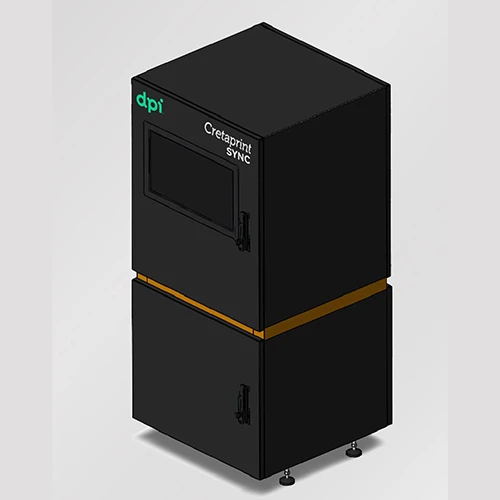
Real-time parameter monitoring is another cornerstone of the system's quality control framework. The system tracks critical production metrics-including tile thickness), operating speed, and ink/glazing application rates-with millisecond precision, alerting operators to any deviations from set quality standards. For example, if the system detects a tile that falls outside the 6mm–50mm thickness range, it automatically diverts the tile to a reject station before it reaches the printing or glazing stages, preventing wasted ink and glazing materials. Similarly, if a printer's ink deposition rate drifts beyond the approved range, the system pauses the printer (without halting the entire line) to recalibrate, ensuring that only tiles meeting quality specs proceed down the line.
The system also integrates post-print quality verification by linking with code readers and imaging sensors, which scan each tile's finished decoration to compare it against the approved design file. This automated check catches subtle defects-such as color inconsistencies or missing design elements-that manual inspections might miss, while the data from these checks is stored in the system's database for future process optimization. Manufacturers can use this data to identify recurring quality issues and adjust production parameters to eliminate the root cause, reducing long-term defect rates by up to 50%.
Beyond in-line checks, the Quality-Control Ceramic Digital Management System enables end-to-end traceability for every tile. Each tile is assigned a unique code that tracks its production batch, equipment used, and quality check results, allowing manufacturers to quickly identify and isolate defective batches if issues arise post-delivery. This traceability not only reduces the cost of recalls but also provides clients with transparency into the tile's production process, strengthening brand credibility.
For manufacturers prioritizing zero-defect production, DPI Cretaprint's Quality-Control Ceramic Digital Management System turns quality assurance from a reactive process into a proactive, in-line function, with the SYNC system ensuring that every piece of equipment works in lockstep to deliver consistent, high-quality ceramic tiles.
FAQ
Is the system compatible with third-party digital glazing machines?
Yes. The system includes a standard Modbus protocol interface that enables communication with most third-party digital glazing machines. DPI's technical team can assist with integration testing to ensure synchronized operation.
Can the system adapt to the quality control needs of special-shaped tiles?
Yes. The system supports customized configuration for special-shaped tiles. By matching with a dedicated vision positioning system, it can accurately identify the contour and position of special-shaped tiles, and customize inspection ranges and standards according to their unique shapes. This ensures that special-shaped tiles, which are prone to decoration defects, also meet consistent quality requirements.
Hot Tags: quality-control ceramic digital management system, China quality-control ceramic digital management system suppliers, factory, High speed ceramic system, Precision ceramic system, Digital management tool, Integrated Ceramic Production Management System, Eco ceramic Digital Management System, Quality control ceramic system


